Does car insurance cover natural disasters
Auto Insurance • Storm & Disaster Coverage
The Storm Took My Car — And Almost Took My Savings Too
What I learned the hard way about whether car insurance covers natural disasters, and the one clause that almost cost me $14,000.
Quick answer: Yes, car insurance can cover natural disasters — but only if you carry comprehensive coverage, and only if that coverage was already active before the disaster hit. Liability-only policies, which are the legal minimum in nearly every state, pay for nothing when nature does the damage.
The hail started at 4:47 p.m. on a Tuesday. I remember the time because I was still in a work call, half-listening to my client and half-watching golf-ball-sized ice hammer the windshield of my Civic through the office window. Fifteen minutes later, the storm was gone. My hood looked like it had lost a fight with a waffle iron, and my back window had a spiderweb crack running corner to corner.
What I didn’t know that afternoon — and what sent me down a three-week rabbit hole of insurance declarations pages, adjuster phone calls, and a genuinely infuriating hold-music playlist — is that the answer to “does car insurance cover natural disasters” depends entirely on two words most drivers never think about until it’s too late: comprehensive coverage.
What “Natural Disaster” Actually Means to Your Insurer
Insurers rarely use the phrase “natural disaster” in a policy document. Instead, you’ll find these events grouped under comprehensive coverage as “other than collision” losses, or informally as Acts of God — events caused by nature and outside human control. That umbrella typically includes:
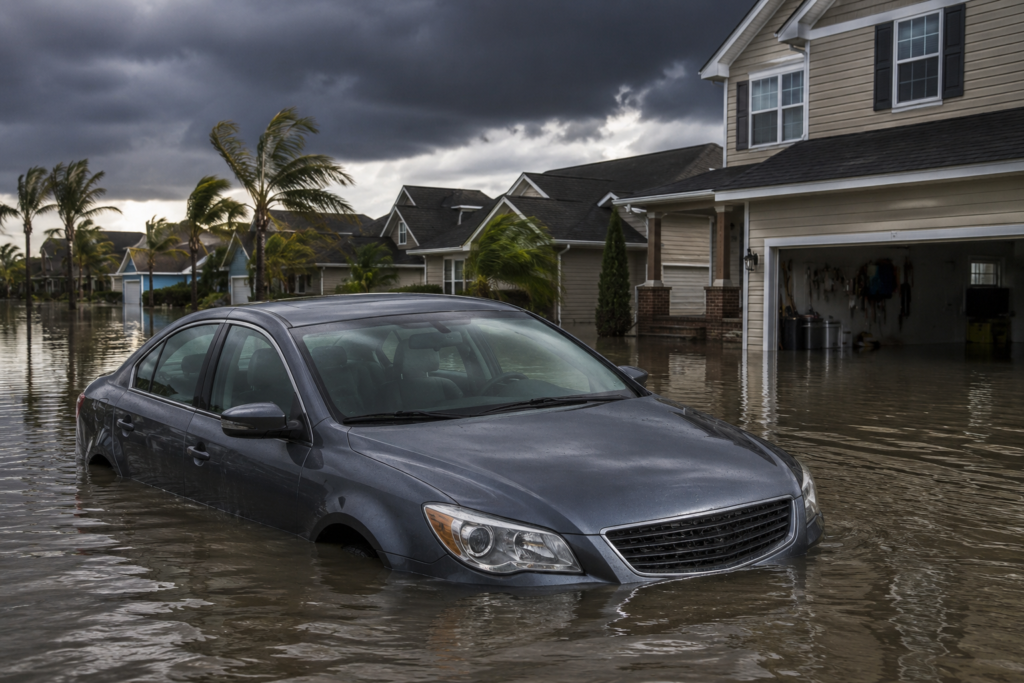
- Hurricanes and tropical storms (wind, flying debris, and storm-surge flooding)
- Tornadoes and straight-line wind events
- Hailstorms
- Wildfires and smoke damage
- Flooding, whether from rivers, flash floods, or storm drains overflowing
- Earthquakes and resulting fires or falling debris
- Falling trees, branches, or ice from a storm
If any of those damage your car and you’re carrying comprehensive coverage, you’re generally protected. Skip comprehensive, and you’re exposed no matter how severe the storm.
Comprehensive vs. Liability vs. Collision: Who Actually Pays
This is the part that confused me for years, so here it is laid out plainly.
| Coverage Type | Covers Storm/Disaster Damage? | What It’s Actually For |
|---|---|---|
| Liability only | No | Damage or injury you cause to other people |
| Collision | No | Hitting another car or object (or being hit) |
| Comprehensive | Yes | Theft, vandalism, animal strikes, fire, and weather/disaster damage |
Here’s the twist most articles skip: comprehensive is optional in every state. Nobody is legally required to carry it. The only reason most drivers have it is because a lender or leasing company demands it until the car loan is paid off. Once the loan is gone, plenty of people drop comprehensive to save money — right before the year a freak hailstorm rolls through.
The Timing Trap That Nearly Cost Me My Claim
When I finally called my insurer about the hail damage, the adjuster asked one question before anything else: “When did you add comprehensive coverage?” I’d had it for two years. Relief. But she explained something I’d never considered — insurers freeze new comprehensive enrollments and coverage upgrades the moment a storm watch or warning is officially issued for your area.
That means you cannot watch a hurricane forming on the news and call your insurer that afternoon to add comprehensive coverage before it makes landfall. The window closes the moment the National Weather Service issues an official advisory. If you’re in a hurricane-prone, tornado-prone, or wildfire-prone region, the only real protection is having comprehensive coverage in place year-round, not scrambling for it during storm season.
What Comprehensive Coverage Costs (2026 Numbers)
Comprehensive is also one of the cheapest pieces of a car insurance policy, which makes skipping it a strange place to cut corners. Recent 2026 industry data puts the national average for comprehensive coverage at roughly $140 to $170 per year, while a full-coverage policy that bundles liability, collision, and comprehensive together runs closer to $2,924 annually, or about $244 a month, nationwide.
For context, that comprehensive sliver is often less than what most people spend on streaming subscriptions in a year — for coverage that can prevent a five-figure out-of-pocket repair or replacement bill. Raising your deductible is another lever: the Insurance Information Institute has found that bumping a $200 deductible up to $500 can cut collision and comprehensive premiums by as much as 30%, which is worth considering if you’re trying to fit disaster protection into a tighter budget.
What Comprehensive Won’t Cover
Comprehensive coverage is generous, but it isn’t unlimited. A few gaps that trip people up:
- Negligence. If you left your windows down during a forecasted storm and rain ruins the interior, insurers can deny the claim as avoidable.
- Mechanical breakdown unrelated to the event. A battery that dies during a flood — but wasn’t actually flood-damaged — isn’t a disaster claim.
- Personal belongings inside the car. Comprehensive covers the vehicle, not the laptop or golf clubs that were in the trunk.
- Diminished value in some states. Even after a repair, some states don’t require insurers to compensate for the car’s reduced resale value.
What To Do the Moment Your Car Is Disaster-Damaged
- Photograph everything before you move the car — wide shots and close-ups of every panel, the interior, and the odometer.
- Don’t attempt to drive a flood-damaged car. Water in the engine or electrical system can cause damage that turns into a safety hazard, and it can also void certain claims if driving worsens the loss.
- File the claim within 24–48 hours when possible. During large regional disasters, insurers get flooded with claims, and early filers are typically inspected faster.
- Get an independent repair estimate if the insurer’s initial number feels low — you’re not obligated to accept the first offer.
- Ask about total loss thresholds. If repair costs exceed roughly 70–80% of your car’s actual cash value (this varies by state), insurers typically total the vehicle instead of repairing it.
Should You Add Comprehensive Coverage Before Storm Season?
If you live somewhere prone to hurricanes, tornadoes, hail, or wildfire, and you currently carry liability-only coverage, this is the section to actually act on. Comprehensive coverage:
- Costs a small fraction of what a single disaster claim would cost you out of pocket
- Must be active before a storm is officially forecasted to count
- Also covers non-weather losses like theft, vandalism, and animal collisions year-round
My hailstorm claim ended up paying out just under $14,000 between the hood, the roof, the windshield, and the rear glass — a number that would have come straight out of my pocket if I’d dropped comprehensive the year before, like I’d genuinely considered doing to save roughly $150.
Frequently Asked Questions
Does basic car insurance cover flood damage?
No. Basic liability-only insurance never covers flood damage to your own vehicle. Only comprehensive coverage pays for flood-related repairs or a total loss.
Can I buy comprehensive coverage right before a hurricane hits?
Generally no. Most insurers stop approving new comprehensive coverage or policy changes once an official storm watch or warning is issued for your area.
Is comprehensive coverage required by law?
No state requires comprehensive coverage by law. It’s typically only mandatory if you’re financing or leasing the vehicle.
What happens if my car is declared a total loss after a natural disaster?
Your insurer pays out the vehicle’s actual cash value at the time of the loss, minus your deductible. This is often less than what you still owe on a loan, which is why lenders frequently require gap insurance alongside comprehensive coverage.
The takeaway: Car insurance can absolutely cover natural disasters — but only through comprehensive coverage, and only if that coverage was already active before the storm was forecasted. If you’re paying for liability only, a single storm season could cost you far more than years of comprehensive premiums combined.