Airline Insurance for Domestics Flights: The $15 Decision That Can Cost You Hundreds.
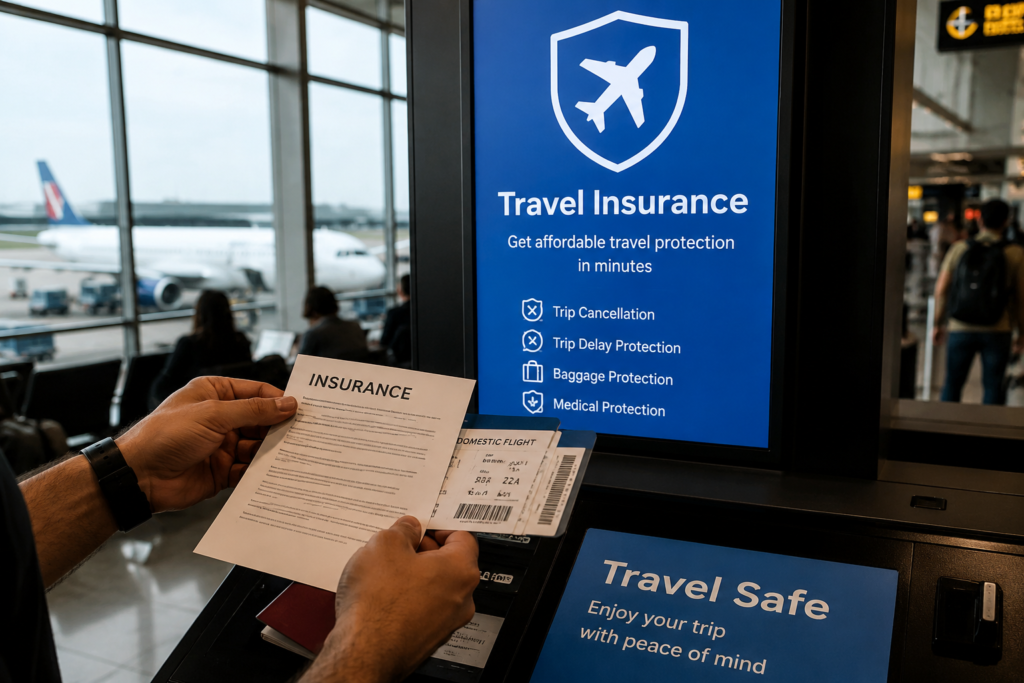
Most travelers think airline insurance for domestic flights is optional because “it’s just a short trip. ”That belief works perfectly — until a canceled flight, missing baggage, medical emergency, or sudden family issue turns a cheap domestic trip into an expensive disaster. A real problem is not that people refuse insurance.
The problem is that most travelers buy flights without understanding what they’re actually risking.
A domestic flight from Lagos to Abuja, New York to Miami, or London to Manchester may only last a few hours. But one delay can trigger hotel costs, missed events, lost business opportunities, or non-refundable bookings. And airlines don’t always reimburse everything.
That’s where airline insurance becomes less about fear and more about financial protection.
What Is Airline Insurance for Domestic Flights?
Airline insurance for domestic flights is a travel protection policy designed to reduce financial losses connected to local air travel.
It may cover:
i. Flight cancellations
ii. Trip interruptions
iii. Lost or delayed baggage
iv. Emergency medical situations
v. Missed connections
vi. Accidental injuries
vii. Refund protection
Some policies are offered directly by airlines during checkout. Others come from independent insurance companies.
The key difference? Not all coverage protects the same risks. And many travelers only discover the gaps after something goes wrong.
The Biggest Mistake Travelers Make
People assume: “Domestic flights are cheap, so insurance isn’t necessary.” But the flight ticket is often the smallest expense connected to the trip.
Think about everything attached to that flight:
i. Hotel reservations
ii. Event tickets
iii. Wedding attendance
iv. Business meetings
v. Car rentals
vi. Vacation packages
vii. Medical appointments
viii. Time-sensitive commitments
If the flight fails, the financial chain reaction begins. That’s why airline insurance is not really about the airplane. It’s about protecting the entire trip ecosystem.
The 60-Second Airline Insurance Decision Machine
Instead of guessing whether you need airline insurance for domestic flights, use this simple framework.
We going to buttress our valuable questions and points as The 3-Bucket Loss Test.
The essence of this emphasis, is not to be caught unaware when diving deeply. Now let’s proceed by answering the questions in all honesty.
Answer these 3 questions honestly.
Bucket 1: Can You Afford to Lose the Entire Trip Cost?
Answer A: “Yes, losing the money won’t affect me.”
Answer B: “No, replacing the money would hurt financially.”
Output: If your answer is B, insurance becomes more valuable immediately.
Bucket 2: Is the Trip Time-Sensitive?
Answer A: “The timing doesn’t matter much.”
Answer B: “If I miss this trip, there are serious consequences.” Examples: Weddings Interviews, Exams, Business deals, Family emergencies, Medical appointments.
Output: If your answer is B, skipping insurance becomes riskier.
Bucket 3: Are Multiple Expenses Connected to This Flight?
Answer A: “It’s only the flight ticket.”
Answer B: “There are hotels, bookings, transportation, or events attached.”
Output: If your answer is B, your real exposure is bigger than the ticket price.
Final Decision Output
Buy Airline Insurance If:
i. Losing the money would hurt
ii. The trip is time-sensitive
iii. Other bookings depend on the flight
Skip Insurance If:
i. You can comfortably absorb the loss
ii. The trip is flexible
No additional expenses depend on the flight. That’s the real decision framework. Not emotions. Not fear marketing. Not pressure at checkout.
The Hidden Psychology Behind Airline Insurance
Most people compare: Insurance cost = small immediate pain vs Potential future loss = invisible possibility.
Humans naturally underestimate invisible risks. Until the invisible becomes expensive. That’s why travelers often reject a $15 protection plan without realizing they’re exposing themselves to a $400–$2,000 financial problem.
Bet A vs Bet B: The Real Cost of Being Wrong
This is where smarter travel decisions happen.
Not by asking: “Will something happen?”
But by asking: “What happens if I’m wrong?”
Bet A: You Skip Insurance and Nothing Happens
Result: Your trip goes perfectly.
Cost: You saved – $10, $20, Maybe $40.
You feel smart because the risk never appeared. This outcome reinforces the belief that insurance is unnecessary.
Bet B: You Skip Insurance and Something Goes Wrong
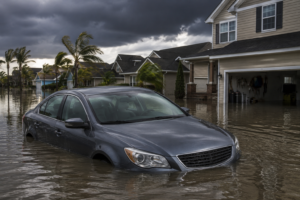
Now imagine: Your flight gets canceled, Your baggage disappears, Severe weather delays your connection, A sudden illness prevents travel, An airline refund only covers part of the loss.
Possible Costs: New flight booking, Hotel rebooking fees, Missed event costs, Transportation losses, Lost work opportunities, Emergency expenses.
Suddenly the “saved” $15 becomes a $600 problem. And this happens more often than many travelers expect.
What Airline Insurance Usually Covers
Coverage depends on the provider and policy type, but common protections include:
i. Trip Cancellation Coverage
ii. Reimburses eligible non-refundable costs if you cannot travel for approved reasons.
iii. Trip Delay Protection
iv. Helps cover meals, accommodation, and emergency expenses during major delays.
v. Lost or Delayed Baggage
vi. Compensation for essential items or permanently lost luggage.
Emergency Medical Assistance.
This is Useful when unexpected illness or accidents happen during travel. Accidental Death or Injury Coverage, Provides financial compensation in severe situations.
What Airline Insurance Usually Does NOT Cover
This is the section many travelers ignore. Common exclusions include:
i. Changing your mind about traveling
ii. Pre-existing medical conditions
iii. Missed flights caused by arriving late at the airport
iv. High-risk activities
v. Incorrect travel information
vi. Government restrictions not covered under policy terms.
Always read the policy wording before buying. The cheapest plan is not always the safest plan.
Airline Insurance vs Credit Card Protection
Some premium credit cards already include travel protection benefits. But there’s a catch.
Coverage may be:
i. Limited
ii. Conditional
iii. Activated only when the entire trip is purchased with the card and many travelers never verify the actual protection details.
Before buying separate airline insurance, check:
i. Trip cancellation limits
ii. Baggage coverage
iii. Delay compensation
iv. Medical coverage terms
Having these, you may already have partial protection.
When Airline Insurance Makes the Most Sense
Airline insurance for domestic flights becomes especially valuable when:
i. Traveling during storm seasons
ii. Flying with children
iii. Attending major events
iv. Booking non-refundable hotels
v. Traveling for business
vi. Carrying expensive luggage
vii. Flying during peak holiday periods
viii. Traveling with tight schedules
The more moving parts attached to your trip, the more valuable protection becomes.
When You May Not Need Airline Insurance
You may safely skip airline insurance if:
i. The ticket is fully refundable
ii. You have strong emergency savings
iii. Your credit card already provides coverage
iv. The trip is flexible
v. No important deadlines depend on the flight
Insurance should reduce meaningful financial risk — not become an automatic purchase.
The Smartest Way to Buy Airline Insurance
Most travelers buy insurance emotionally during airline checkout. That’s the worst time to decide. Instead:
Step 1: Calculate Your Total Risk.
Add together: Flights, Hotels, Event tickets, Transportation, Other prepaid costs
Step 2: Compare That Number to the Insurance Cost.
If a small premium protects a large financial exposure, the math becomes clearer.
Step 3: Read the Coverage Limits.
Focus on: Cancellation reasons, Maximum payout, Delay compensation, Exclusions, Claim process
Step 4: Avoid Buying Based Only on Fear.
Buy protection because the numbers make sense. Not because the checkout page scares you.
The Real Purpose of Airline Insurance
Airline insurance for domestic flights is not designed to make travelers paranoid. Its real purpose is simple:
To prevent a manageable inconvenience from becoming a financial emergency.
Sometimes the insurance feels unnecessary. Until the exact day it becomes priceless. And that’s the uncomfortable truth about risk. Ythe value of protection is invisible right up until the moment you need it.
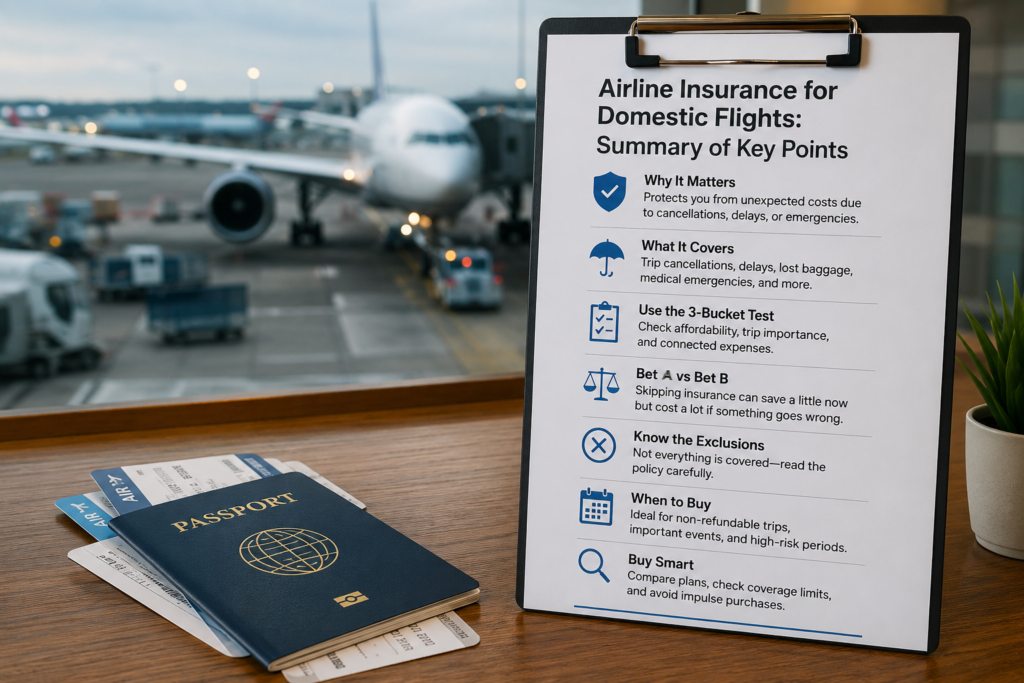
Final Verdict: Should You Buy Airline Insurance for Domestic Flights?
Here’s the simplest answer. Buy airline insurance when: The trip matters financially, Multiple expenses depend on the flight, Losing money would seriously affect you
Skip it when: You can easily absorb the loss, The trip is flexible, Your existing protections already cover the risk.
The smartest travelers don’t buy insurance automatically. But they also don’t ignore risk blindly. They evaluate the downside before takeoff. And that single habit can save far more money than the insurance itself.