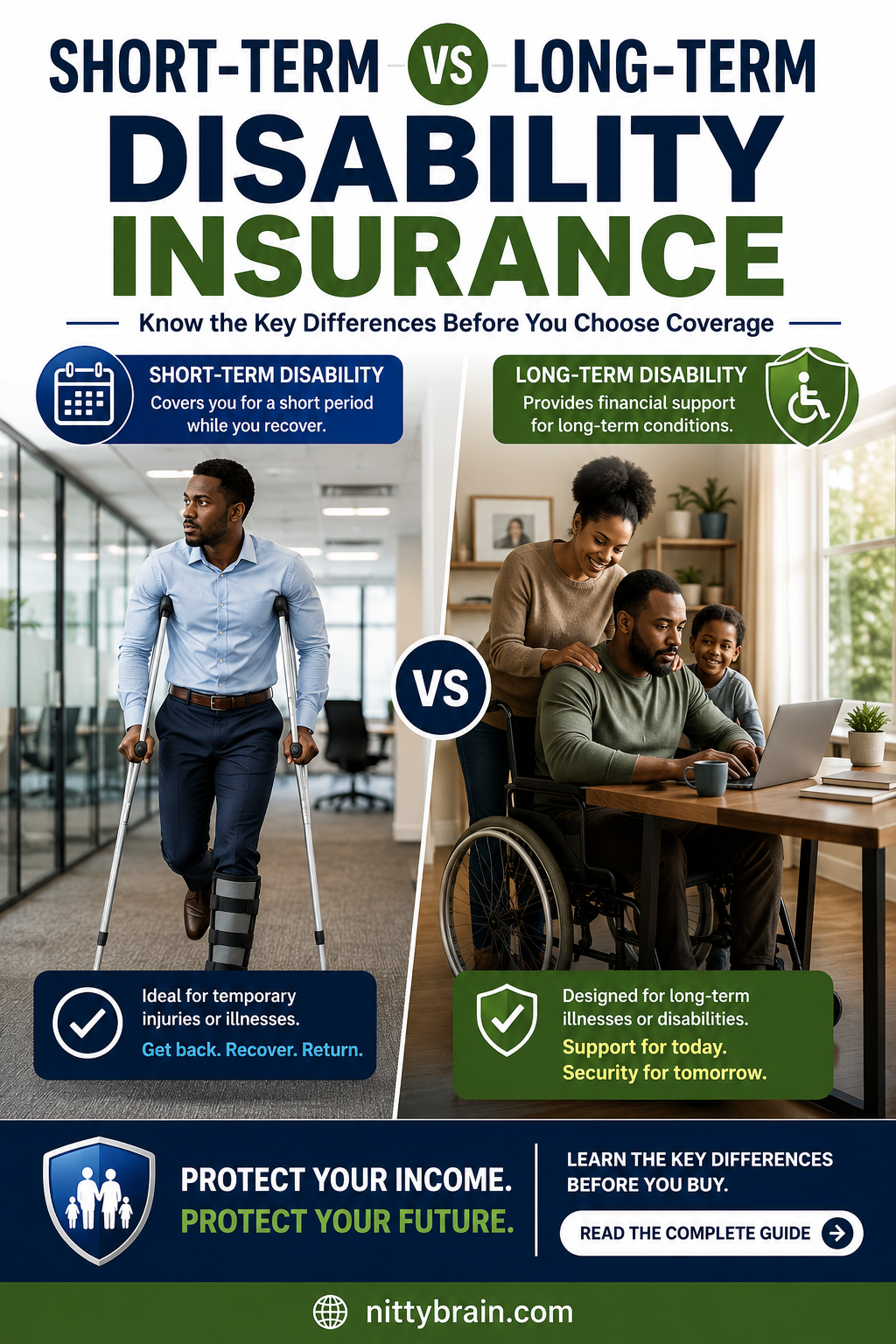
Short term and long term
Income Protection
One Paycheck Away: The Truth About Short-Term and Long-Term Disability Insurance
You insure your car. You insure your house. But the asset that pays for both of those things — your ability to go to work and earn a living — is the one most people leave completely unprotected. Short-term and long-term disability insurance exist to close that gap, and understanding how they actually work could be the difference between a rough few months and a financial collapse you never recover from.
Here’s the uncomfortable math nobody tells you at open enrollment: a 20-year-old today has roughly a 1-in-4 chance of becoming disabled and unable to work for at least a year before reaching retirement age. Not a car accident. Not a dramatic, headline-worthy event. Usually it’s something quieter — a back injury that won’t heal right, a cancer diagnosis, a mental health crisis, a complicated pregnancy. And when it happens, the bills don’t pause just because your paycheck did.
Today’s 20-year-olds will face a disability lasting a year or more before they retire
Of working Americans have no private or employer-sponsored disability coverage at all
This guide breaks down exactly what short-term and long-term disability insurance cover, how they work together, what they cost, how they’re taxed, and how to choose coverage that actually protects your household if the unexpected happens. No jargon, no sales pitch — just the information you need to make a decision you won’t regret.
What Short-Term and Long-Term Disability Insurance Actually Are
Both short-term disability insurance and long-term disability insurance do the same basic job: they replace a portion of your income when a covered illness or injury keeps you from working. The difference is timing and duration, and understanding that difference is the whole key to building coverage that doesn’t leave a gap.
Short-term disability insurance (STD) is built for the immediate aftermath of a disabling event. It typically kicks in after a short waiting period — often 7 to 14 days — and pays out for anywhere from a few weeks up to about a year, depending on the policy. Think of it as the bridge between a paycheck and a diagnosis: a broken leg, a surgery recovery, a difficult pregnancy, a serious infection.
Long-term disability insurance (LTD) is built for the marathon, not the sprint. It has a longer waiting period — commonly 90 days, sometimes up to a year — but once it activates, it can pay benefits for several years, or in some cases all the way until you reach retirement age. This is the coverage that matters most for conditions like cancer, chronic pain disorders, major cardiac events, or serious mental health conditions that keep someone out of work long-term.
The way they’re designed to work together: short-term disability covers you first, then long-term disability picks up where short-term leaves off. Most people who only have one or the other discover the gap at the worst possible moment — either they run out of short-term benefits with no long-term backup, or they have long-term coverage but nothing to bridge the first three months of lost income.
Short-Term vs. Long-Term Disability Insurance at a Glance
| Feature | Short-Term Disability | Long-Term Disability |
|---|---|---|
| Waiting period | 7–30 days | 30–365 days (90 is most common) |
| Benefit duration | A few weeks up to about 12 months | Several years, or up to retirement age |
| Typical income replacement | 40%–70% of salary | 40%–70% of salary (often around 60%) |
| Best suited for | Temporary, recoverable conditions | Serious, long-lasting or permanent conditions |
| Employer availability (private sector) | About 4 in 10 workers have access | About 1 in 3 workers have access |
Why This Coverage Matters More Than People Think
Most households run on a tight enough margin that even one missed paycheck causes stress. Roughly half of U.S. households would face real financial hardship within six months if the primary wage earner suddenly couldn’t work. And Social Security Disability Insurance, the safety net people assume will catch them, is a lot thinner than most expect.
- The average SSDI approval rate on a first application hovers around 20%, with many applicants only succeeding after reconsideration or a lengthy appeals process that can take months.
- The average monthly SSDI benefit for a disabled worker is roughly $1,630 — below the poverty guideline for a two-person household.
- The wait for an initial SSDI decision typically runs three to five months, and appeals can stretch far longer during backlog periods.
In other words, Social Security disability was never designed to be someone’s only plan. It’s a supplement, and often a slow and modest one at that. Private short-term and long-term disability insurance exist precisely to fill the space between what SSDI offers and what your actual bills require.
What Disability Insurance Costs
This is usually where people talk themselves out of coverage before they’ve even seen a real quote. In practice, individual disability insurance typically runs about 1% to 3% of your annual salary per year. For someone earning $60,000, that’s roughly $600 to $1,800 annually — a modest cost weighed against replacing years of lost income if a serious illness or injury takes you out of work.
Your actual premium depends on several factors:
- Age and health — younger, healthier applicants generally lock in lower rates and are far less likely to be declined.
- Occupation — physically demanding or high-risk jobs cost more to insure than desk-based roles.
- Benefit amount and length — a higher monthly payout or a longer benefit period increases the premium.
- Elimination period — choosing a longer waiting period before benefits start typically lowers your premium.
- Own-occupation vs. any-occupation definition — policies that pay out if you can’t do your specific job (rather than any job at all) cost more but offer stronger protection.
Is Disability Insurance Taxable?
This detail trips up more people than almost anything else about disability coverage, and it can dramatically change how much money actually lands in your pocket during a claim. The rule comes down to one question: who paid the premiums, and with what kind of dollars?
- Employer paid the premiums: benefits you receive are generally taxable as income.
- You paid premiums with pre-tax payroll dollars: benefits are generally taxable, because the IRS treats pre-tax contributions as employer-paid.
- You paid premiums yourself with after-tax dollars: benefits are typically tax-free.
- Split funding: if you and your employer share the premium cost, only the portion of the benefit tied to the employer-paid share is taxable; the after-tax portion you funded stays tax-free.
This is why some financial advisors suggest paying your share of disability premiums with after-tax dollars whenever your employer offers the choice: it costs slightly more upfront, but it means the benefit check that arrives during the hardest stretch of your life won’t be reduced by a tax bill.
Common Reasons People Actually File Claims
Disability insurance often gets pictured as coverage for dramatic accidents, but the data tells a different story. Claims tied to mental and nervous conditions and musculoskeletal issues have been climbing, while purely accident-related claims have made up a shrinking share of the total. Pregnancy complications, cancer, and chronic pain conditions also rank among the most common reasons people file. This is part of why “own-occupation” policy language matters so much — illness-driven disabilities are frequently gradual and don’t always look like the injuries people picture when they think about coverage.
How to Choose the Right Coverage
- Check what your employer already offers. Ask HR for the specific benefit percentage, waiting period, and maximum benefit duration — group policies vary widely, and many replace less income than people assume.
- Calculate your real monthly bare-minimum expenses. Housing, food, insurance, debt payments, childcare. This number, not your full salary, is often the true benefit target you need.
- Close the gap with an individual policy if needed. If your employer plan caps out low or doesn’t exist, a supplemental individual short-term or long-term policy can fill the difference.
- Look closely at the definition of disability. “Own-occupation” coverage pays out if you can’t perform your specific job, even if you could technically do a different one. “Any-occupation” coverage is stricter and cheaper, but riskier if your job is highly specialized.
- Match your elimination period to your emergency fund. If you have three months of expenses saved, a 90-day waiting period on long-term coverage is far less risky than if you have nothing set aside.
- Decide who pays the premium, deliberately. If you have the choice, paying with after-tax dollars keeps future benefits tax-free — worth factoring into your decision, not just an afterthought.
The Bottom Line
Your income is the engine behind every other financial goal you have — your mortgage, your retirement savings, your kids’ future. Short-term and long-term disability insurance aren’t about expecting the worst; they’re about making sure one bad diagnosis or one hard fall doesn’t take everything else down with it. Look at what your employer already provides, find the gap, and close it while you’re still healthy enough to qualify for great rates.
Frequently Asked Questions
Do I need both short-term and long-term disability insurance?
Most people benefit from having both because they cover different gaps in time. Short-term disability insurance replaces income during the first weeks or months after a disabling illness or injury, while long-term disability insurance takes over once short-term benefits run out and can continue paying for years, or until retirement age, if you remain unable to work.
Is disability insurance income taxable?
It depends entirely on who paid the premiums. If your employer paid them, or you paid them with pre-tax payroll dollars, the benefits are generally taxable. If you paid the premiums yourself with after-tax dollars, the benefits you receive are typically tax-free.
How much does disability insurance cost?
Individual disability insurance usually costs between 1% and 3% of your annual salary per year, though your exact price will depend on your age, health, occupation, and the benefit amount and duration you select.
What’s the difference between “own-occupation” and “any-occupation” disability coverage?
Own-occupation coverage pays a benefit if you can no longer perform the specific duties of your own job, even if you’re physically capable of doing a different type of work. Any-occupation coverage only pays if you can’t perform any job you’re reasonably qualified for, which makes claims harder to win but usually costs less in premiums.
This article was researched and written by the NittyBrain team using current public data from sources including the Social Security Administration, IRS guidance on disability income taxation, and published industry disability insurance research current as of 2026. It’s intended for general educational purposes and isn’t a substitute for advice from a licens






1 thought on “Short Term and Long Term Disability Insurance”